Digital Transformation Tools For Facilities Management
The speed of technological development seems to be exponential, yet there is still an assumption that normal people, like you and me, understand all the terminology.
In order for FM teams to make appropriate decisions on behalf of their organisations, it’s vital that key terms are understood, as well as the benefits they could deliver within the built environment.
I’m a huge believer that knowledge is power, which can be wielded by people trying to sell stuff, in the belief that nobody wants to admit they don’t understand.
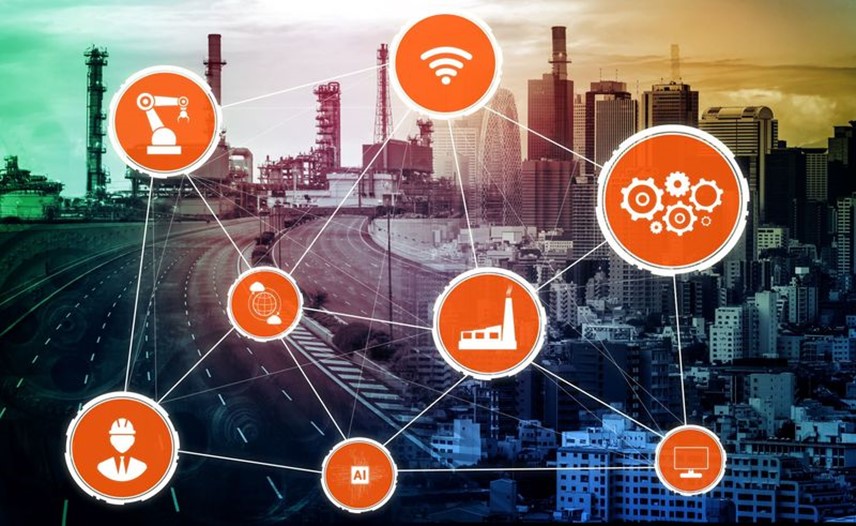
Key technologies powering the shift towards smarter, data-driven facilities management include:
- Operational Technology (OT) – OT involves systems that monitor and control the physical environment and infrastructure of a building, such as building automation systems (BAS), security and access control, and IoT sensors. Unlike Information Technology (IT), which focuses on data, OT’s primary concern is ensuring the safety and efficiency of physical systems and assets by detecting or causing changes through direct physical interaction.
- Internet of Things (IoT) – IOT is redefining facets of maintenance, security, and energy management. It involves using sensors and connected devices to monitor building systems in real time. From HVAC units to lighting systems and occupancy sensors, IoT devices provide continuous feedback, enabling predictive maintenance and energy optimisation.
- Artificial Intelligence (AI) and Machine Learning – AI’s incorporation into FM is far more than a futuristic dream — it’s here now! AI can analyse data from sensors and systems to identify patterns, predict maintenance needs, optimise resources and automate responses. Machine learning algorithms continually improve performance by learning from past outcomes. Together they signal a move from reactive methodologies to proactive strategies, operational efficiency, plus, vitally, a financial edge in an increasingly competitive arena.
- Computerised Maintenance Management Systems (CMMS) – CMMS helps manage maintenance schedules, track work orders, and monitor asset performance. These systems replace spreadsheets and paper logs, allowing teams to plan more efficiently and respond to issues faster.
- Building Information Modelling (BIM) – BIM offers a digital representation of a facility’s physical and functional characteristics. It supports better decision-making throughout the building lifecycle—from construction and renovation to daily operations.
- Building Management Systems (BMS) / Building Automation Systems (BAS) – These are installed in buildings to control and monitor the building’s mechanical and electrical equipment, such as HVAC, lighting, energy, fire systems, and security systems. Because the BMS can remotely control heating and ventilation systems from a computer or mobile device, facility management staff don’t have to physically enter a location to adjust devices.
- Energy Management Software(EMS) – EMS is a digital platform that tracks, analyses and optimises a facility’s energy usage across systems like refrigeration, HVAC, lighting, etc. EMS aggregates data from sensors and meters (or building automation controls) to give facility managers real-time visibility into how energy is being consumed, making recommendations to improve efficiency.
- Computer-Aided Facilities Management (CAFM) – CAFM provide operational coherence by consolidating various facility tasks, eliminating inefficiencies and redundancies. It offers a broader, holistic approach to managing an entire facility. It includes CMMS like functions but can also cover space management, real estate controls, asset management and usage.
- Digital Twinning – This is a very detailed 3D model of a building or facility that gets updated with real-time data. It contains all the information regarding the assets in the facility, such as the HVAC system, plumbing system, lighting system, electrical systems, built environment, and various other parts. It allows managers to oversee, monitor, and control facilities in real-time, leading to reduced maintenance costs and enhanced energy efficiency.
Collectively, these systems showcase unparalleled versatility.
Their adaptability underscores a crucial message: regardless of geographical location or facility type, modern software solutions are reshaping the way facilities operate.
Technical solutions are empowering FM divisions to unlock new levels of productivity and sustainability in their operations.
I’m sure this blog will quickly become out-of-date as new tools are being developed but I’m determined to assist smaller organisations to access the technology that would have historically been out of reach.